Seven flags at the World Cup: what independent integrity monitoring changed
The Copenhagen Group raised seven alerts at a World Cup that FIFA declared clean. The gap between the two accounts is the strongest case yet for independent, connected integrity systems.
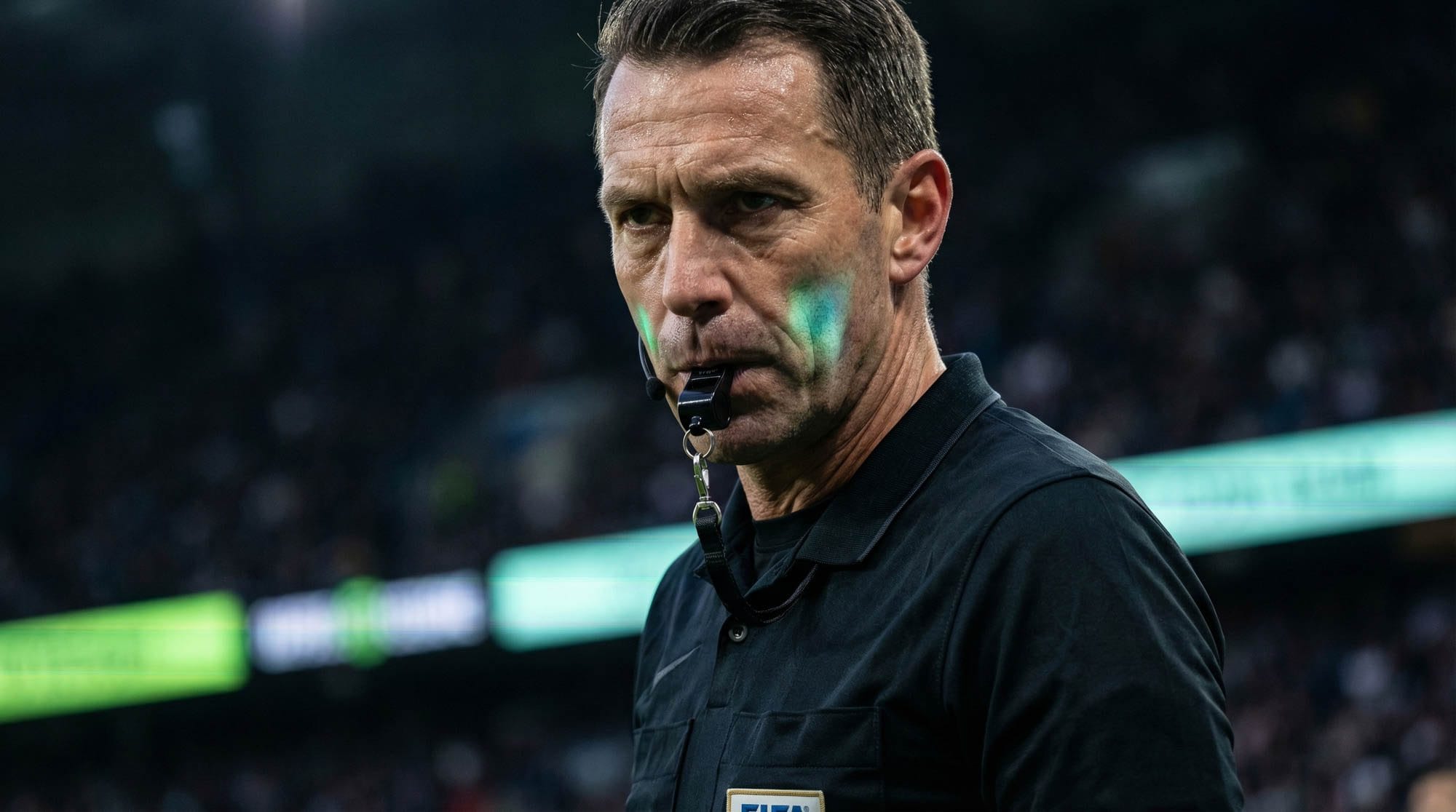
Two verdicts on one tournament
On 22 July 2026, FIFA's Integrity Task Force, which worked alongside the FBI and Interpol throughout the tournament, reported that it had identified no suspicious betting activity or indications of match manipulation in connection with any of the 104 fixtures at the 2026 World Cup.
On 23 July, the Group of Copenhagen published a different account. The Group is the network of national platforms established under the Council of Europe's Macolin Convention, and is itself a member of FIFA's task force. Its monitoring operation had raised seven yellow alerts for potential betting irregularities during the tournament.
Neither statement is false. A yellow alert is not a finding of manipulation, and FIFA's language was about indications of manipulation, not unusual market movement. But two bodies looked at the same tournament and reached conclusions that read as contradictory to any federation, broadcaster or supporter who saw the headlines. That gap is the subject of this piece.
7
yellow alerts raised by the Group of Copenhagen across 104 matches
$240B
estimated global betting turnover on the tournament, roughly double Qatar 2022
$50B
trades on prediction markets in June 2026 alone
What was flagged
Four of the seven alerts have been described publicly.
The first came in the opening match, when South Africa's Themba Zwane was shown a red card in the 84th minute against Mexico.
The second involved Spain's goalless draw with Cape Verde. Spain entered the match with an implied win probability of around 91 per cent. Roughly $4.8 million was traded on the Polymarket prediction market on Spain failing to win. The match finished 0-0.
The third was a video review lasting around three and a half minutes before Ferran Torres's goal against Saudi Arabia was disallowed, in a match Spain won 4-0.
The fourth is the one that should concern every governing body. United States forward Folarin Balogun was sent off against Bosnia and Herzegovina on 2 July. The same day, Polymarket opened a market on whether he would play in the next match against Belgium. No such market existed for any of the other 14 players shown a red card at the tournament. On 5 July, FIFA rescinded the suspension, only the second time in World Cup history that a red-card ban had been overturned, and Balogun was cleared to play.
Christian Kalb, a betting integrity specialist quoted in the coverage, noted that alerts of this kind can often be explained by odds movements or by operators hedging liquidity. The problem he identified was different: markets on discretionary decisions create a conflict of interest wherever someone holds inside knowledge of how the decision will go.
Why the two accounts diverge
The divergence is structural rather than a matter of competence.
FIFA's task force draws on operator data, monitoring partners and law enforcement, with a mandate to detect manipulation of results. The Group of Copenhagen aggregates alerts from national platforms whose mandate is the integrity of betting markets in their own jurisdictions. Their thresholds, data sources and definitions differ. One body can find nothing that meets its standard of proof while the other logs seven events that meet its standard of concern.
Both are doing their jobs. What is missing is a shared evidentiary layer: an agreed record of which alerts were raised, what each body examined, what explanations were found and what remained open. Without it, the public gets two verdicts and no reconciliation, and every federation is left to interpret the disagreement on its own.
Prediction markets moved the boundary
Traditional sportsbooks generally decline to offer markets on administrative or disciplinary outcomes, because the incentives are obvious. Prediction markets do not operate under the same conventions. The Balogun market was a wager on a decision to be taken by a small group of officials, listed within hours of the incident that created it.
In February 2026 the US Commodity Futures Trading Commission withdrew its proposed rule on event contracts and a staff advisory on sports event contracts, leaving the legal status of these markets contested between federal and state authorities. Turnover on the World Cup was estimated at $240 billion, about double the figure for Qatar 2022. The volume is now large enough that ignoring it is not an option for anyone responsible for a competition.
What this means for federations, leagues and regulators
Three things follow.
First, monitoring has to be independent of the body whose competition is being monitored, and connected to that body's own reporting and education channels. An alert that arrives as a press story a week after the final has already failed.
Second, disciplinary and administrative decisions are now betting surfaces. Who knows a decision, when they know it and how it is communicated need the same integrity controls as team news and injuries.
Third, institutions need their own record. When two respected bodies disagree in public, a federation with its own audit trail of alerts, explanations and actions can answer questions with evidence rather than with a statement of confidence.
GAMECHANGER360 builds 360 Sentinel for exactly this: real-time monitoring and risk scoring that sits inside an institution's own system, connected to its reporting channel and its education programme, so that the record exists before the headline does.
Sources
Related reading
 Insight
Two bodies, 104 matches, opposite conclusions
FIFA reported nothing suspicious across the World Cup. The Group of Copenhagen recorded seven yellow notices. Sport has no shared definition of the word.
 Insight
The market moved from results to moments
In-play micro-markets let a participant shift a price without changing a score. Monitoring built around outcomes does not see that happen.
 Insight
Prediction markets are sport's next regulatory flashpoint
The CFTC withdrew its event-contract rule, then a World Cup suspension became a tradable market. What regulators and federations should prepare for.