The approach came from a friend
Codes of conduct are written for a stranger with a proposition, and the approach that reached me came from someone I already trusted.

Croydon Schools to a Palace scholarship
I was born in Islington in May 1989. I played for Croydon Schools and went to school in Croydon, and at 16 Crystal Palace took me into their academy. In 2006-07 the club named me Scholar of the Year. In October 2007 I was an unused substitute for the first team against Watford. In May 2008 Palace released me. I was 19.
What followed is the part of a career that nobody writes about. A loan at Weymouth, one appearance. A spell at Bromley. Then Lincoln City, where the football actually happened. A Football League debut at Morecambe in February 2009, a first goal at Chesterfield a year later, and the club's Young Player of the Year award for 2009-10. Around 60 appearances in total, before I left by mutual consent in January 2011.
After Lincoln the drop was quick. A few weeks at Kettering Town late in 2011. Back to Bromley until 2013. Sutton United for two months. Whitehawk for two more. Four clubs in two years. By the end of 2013 I was not playing at all.
I set that out because the risk in football does not sit where the cameras are. It sits in that list.
Nobody offered me a proposition
I had signed the codes of conduct. I had sat through the briefings. I could have told you, accurately, that fixing a match was a criminal offence and that it would end my career. None of that was in the room when it mattered, because the room did not look anything like the scenario in the training.
Fixers do not approach players with cash and a proposition. They approach with friendship, belief and attention at a point when nobody else is offering any of the three.
The first conversations are not about football. They are about your contract, your injury, your travel, your rent. Someone takes an interest in the specifics of your life at exactly the moment when the club has stopped taking an interest. There is no ask. There is no ask for a long time. There are favours, and the favours run in your direction.
By the time the ask arrives, the cost of saying no is not the loss of a bribe. It is the loss of a relationship, and at that stage in a lower-league career the relationship may be the most stable thing you have. That is the mechanism. It is patient, it is cheap, and it is aimed at the gap between how much oversight a player has and how much support.
What the case was actually about
Newspaper undercover reporting started it. The National Crime Agency ran the investigation, assisted by the Gambling Commission's Sports Betting Intelligence Unit and the Football Association. I was arrested at the end of 2013 and charged in January 2014 with conspiracy to defraud.
At the first trial, at Birmingham Crown Court in June 2014, the jury could not reach a verdict on me and a retrial was ordered. On 29 April 2015 I was convicted of conspiracy to commit bribery and sentenced to 16 months. Delroy Facey was sentenced to two years and six months. Sentencing us, Judge Mary Stacey said that we had betrayed all that trust, and that in both cases the motivation was financial greed.
The offence facts are more useful than the sentences. Facey approached more than six lower-league players and offered them £2,000 each to lose deliberately. The matches at issue were in League Two and Conference South. No player accepted, and no match was fixed as a result of those approaches.
Two thousand pounds. That figure tells you everything about how this works. It is not a fortune. It is calibrated to a wage, not to a sport. Set against a Premier League salary it is an insult. Set against a Conference South wage in the last month of a contract, it is a decision. The people who do this know precisely which players are in the second category. So does anyone who bothers to read a squad list next to a set of contract expiry dates.
What I said at Nyon, and what I meant by it
In November 2022 I spoke at UEFA's Fight the Fix conference in Nyon. I said that education is a fundamental tool for tackling match-fixing. I still think that, on one condition: that the word education is doing real work rather than describing an annual slide deck.
Later the same month, at the Council of Europe's MARS convention in Strasbourg, I put the underlying problem more plainly. Football players at all levels of the game remain the most targeted and the most vulnerable to criminal approaches. They may be oversighted, regulated, and investigated, but they are not anywhere near as protected.
Nothing in those two sentences has changed in the four years since. Sport has continued to add oversight to players faster than it has added protection for them. Oversight catches a player after a decision. Protection changes the decision.
The work since
I set up MS5 Solutions in 2019 and started doing this properly. Academy sessions, delivered in person, at clubs including Manchester United, Arsenal, Tottenham and Crystal Palace. Conference platforms where the people who write the rules are in the room. Evidence to the House of Lords International Agreements Committee in July 2026 on whether the United Kingdom should ratify the Macolin Convention, which I think it should.
In August 2023 I started this company with Andy Harvey, because the sessions were not enough on their own. A talk changes what a squad knows on a Tuesday. It does not change what happens when the approach lands eight months later, on a phone, from someone the player likes.
What I want you to build
If you run a federation, a league, a club or a regulator, four things would do more than another policy.
Know which of your players are exposed right now. Contract status, wage level, injury, recent transfer, recent relegation, the tier they play in. That is a list you can produce this week, and it is a better predictor of risk than anything a code of conduct measures.
Give them somewhere to take a first conversation. Not a hotline into an investigation. A route where a player can flag an odd new friendship and remain a person who flagged something, not a person under suspicion. Nobody reports a friend into a disciplinary process.
Make education repeated, specific and delivered by people who have been in the room. Once a season, in a lecture theatre, in the language of a rulebook, teaches nothing. The content has to be about body language, warning signs and how to end a conversation, because that is the actual skill.
Connect it to the rest of your integrity function. A report, a monitoring alert, a squad's circumstances and a disciplinary record are all evidence about the same risk. In most organisations they sit in four places and never meet.
None of that requires new law, a new body or a large budget. It requires treating recruitment as the relationship it is, and building the thing that a document cannot do.
Related reading
 Insight
Why athlete integrity education fails, and what actually lands
Most integrity education is delivered once, in the wrong register, at the wrong moment. What lived experience, career-stage pathways, language, timing and measurement change.
 Insight
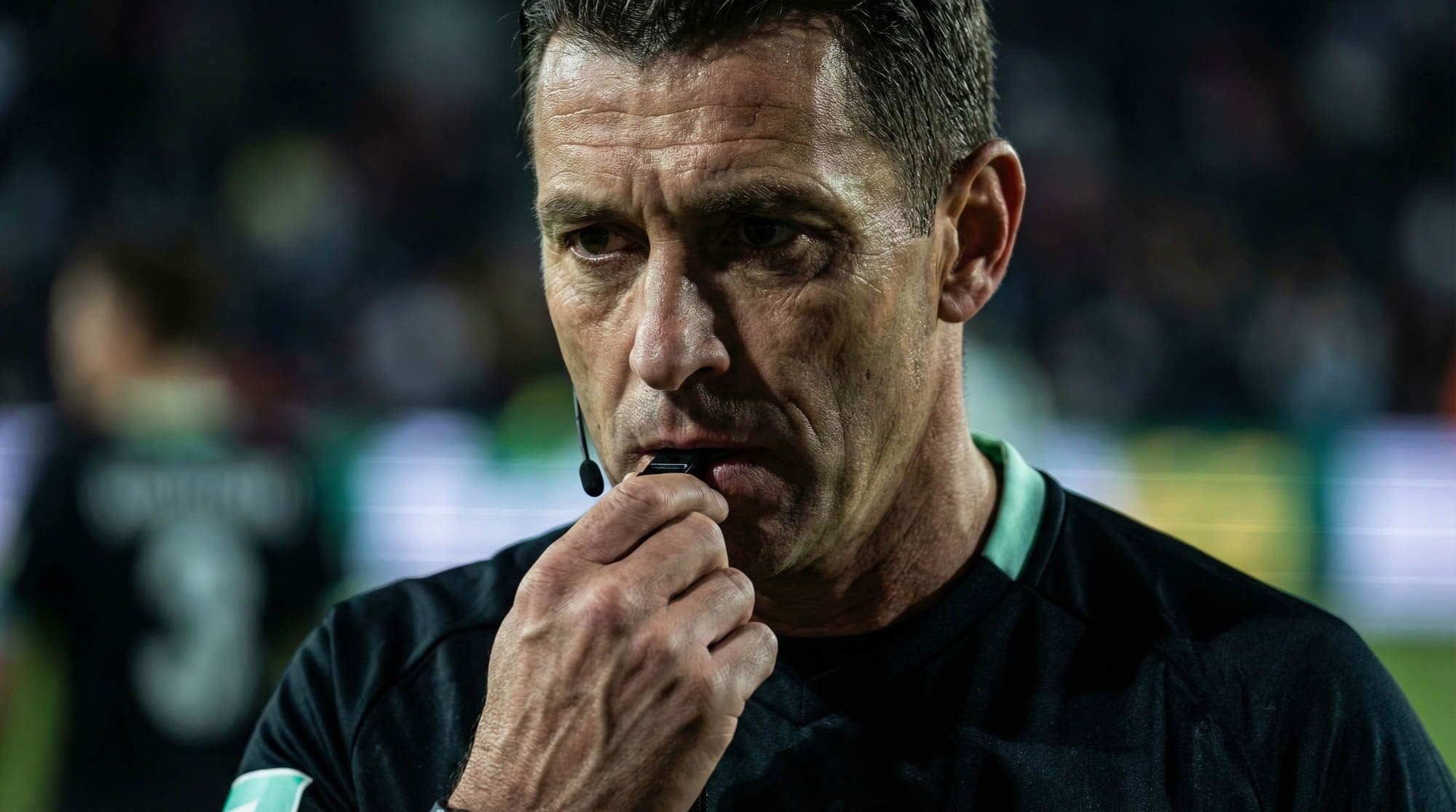
The officials are the blind spot
A Turkish federation audit found 371 of 571 professional referees holding betting accounts. Most integrity programmes are still built for competitors.
 Insight
Integrity is a systems problem, not a policy problem
Codes of conduct did not stop me in 2012 and they will not stop the next player. Why integrity has to be built as infrastructure across seven connected capabilities.